
c/o Studio Marco Piva, Via Maiocchi 9
20129 Milan
MON–SUN 12:00–18:00
ARTISTS:
Nicole Colombo
Alighiero Boetti (Collezione Ramo)

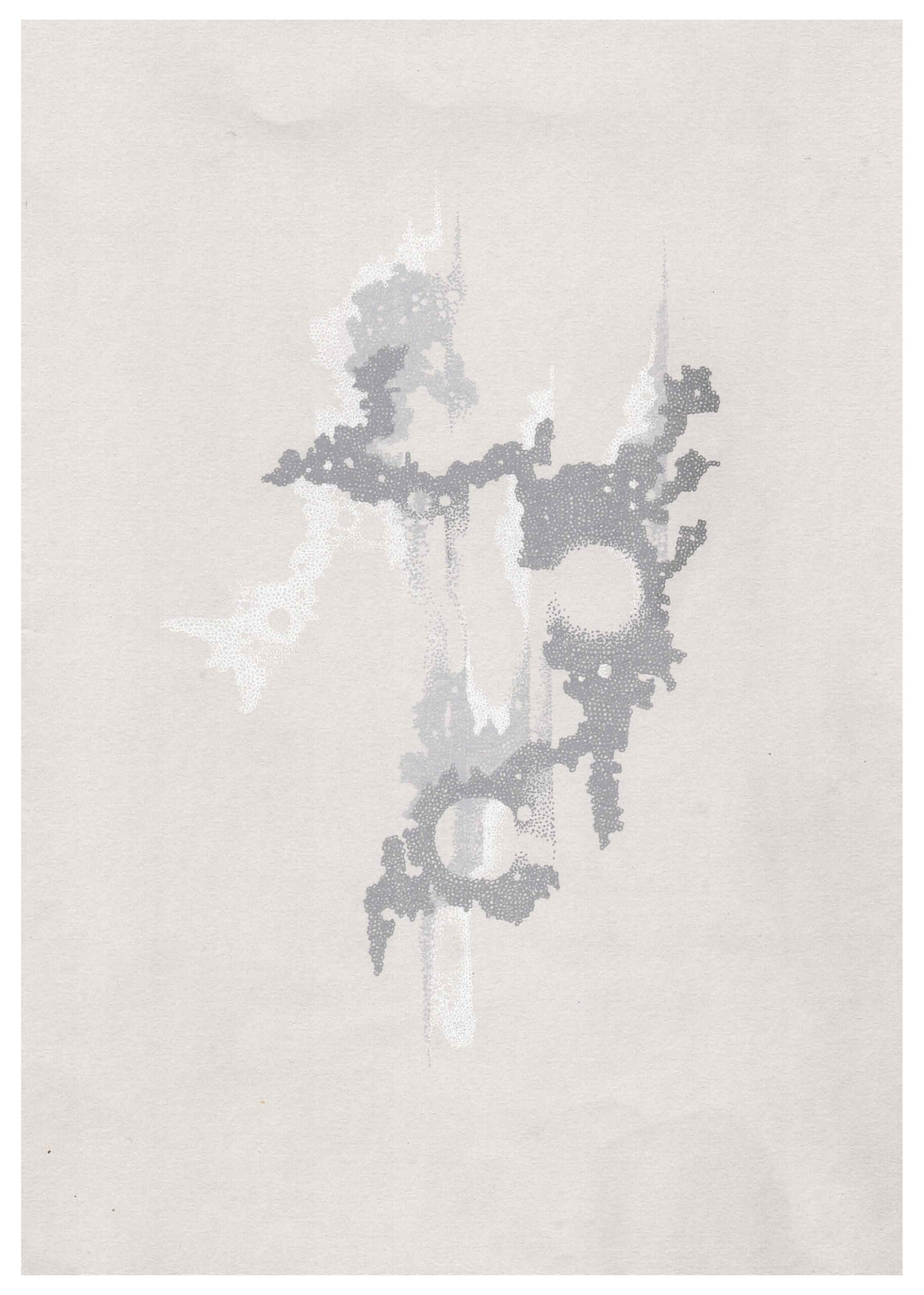
Colombo, chiaro di luna, 2026, inchiostro su carta, 21×29.7 cm
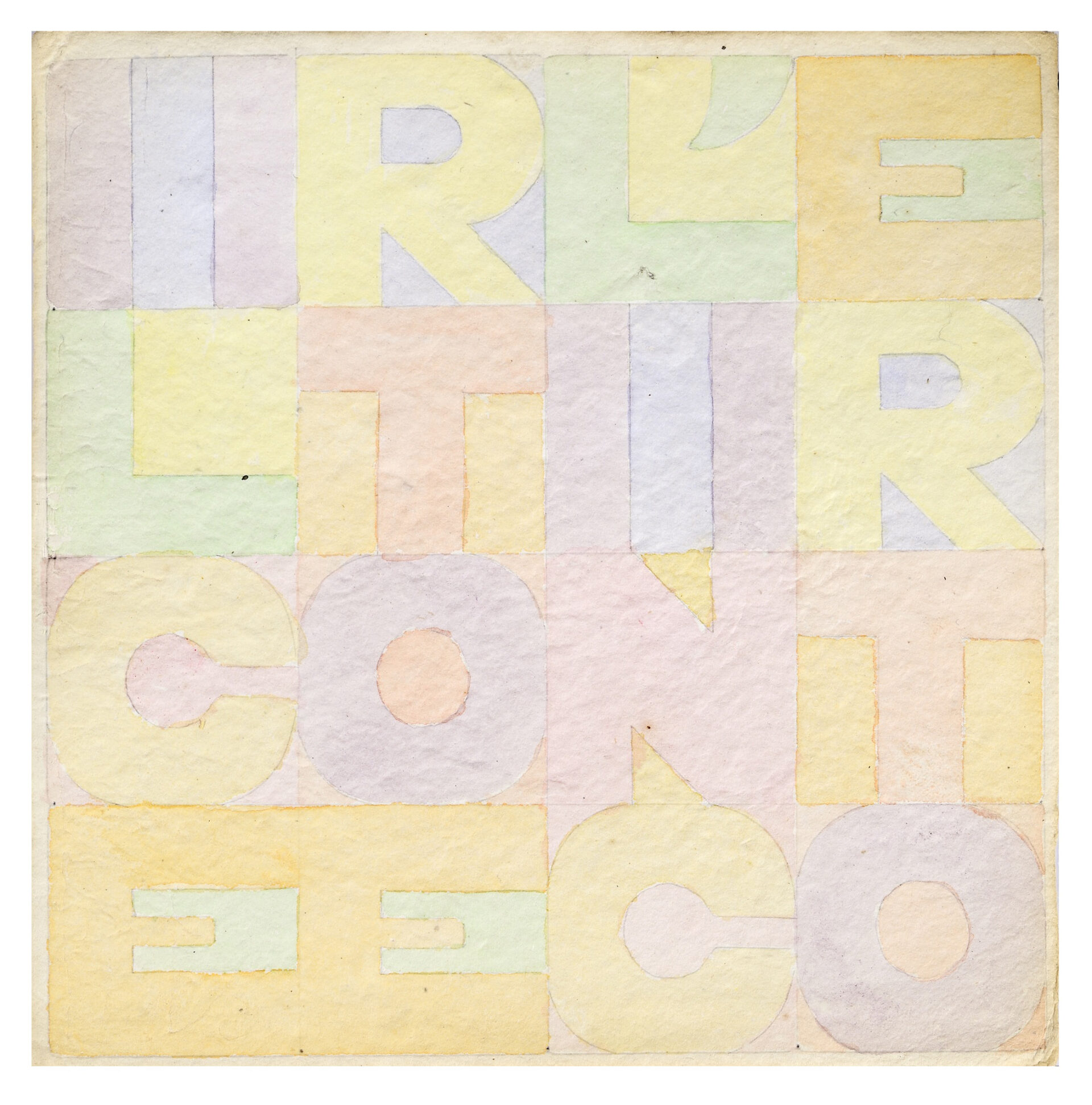
1588_boetti_il certo e l’incerto_1979
Nicole Colombo answers the questions of
Irina Zucca Alessandrelli, curator of the Ramo Collection
What does drawing mean to you?
I like to say that I work with sculpture; inevitably, this raises a series of issues and realities, concrete questions that one must confront. Drawing, on the other hand, does not. For me, drawing has become a space for the free expression of a combination of feelings and lived images, which do not necessarily have to abide by the laws of physics; a space of awareness and consciousness, a ritual in which I can empty my soul and mind, sift through things and understand what remains.
What materials, techniques, and creative processes do you use when working on paper?
I began by using Rapidographs with very fine black ink. Drawing is first and foremost thought, study. It had to be clear, capable of conveying an idea, and therefore a slave to that idea, a tool. Then something changed; I incorporated white and grey, and finally black India ink. As a result, the papers also changed, from white sheets to those in different shades of grey. The tool thus became a space for freedom and expression. Not only a means, but also an end.
Why did you choose this work from the Ramo Collection?
I have always felt connected to Alighiero Boetti for many different reasons; I remember finding a photograph of him with his dog. It looked like mine, and it has always made me smile.
Then there is the whole issue surrounding his use of opiates, his connection with Afghanistan, the fragility and complexity of being human, a condition of life that he brought into his art, and that sense of a constant search for suspension. A daily practice, a continuous questioning.
Moreover, in his work, as in mine, repetition becomes a kind of ritualistic tool; the same mark, gesture, or pattern, repeated for hours, almost as a vehicle for spirituality, for contemplation.
“Certainty and uncertainty,” one the opposite of the other, balanced and arranged within a secure figure such as the square. I think he imagined time as something positive, as what made art, Art; I, on the other hand, must admit that unfortunately I do not have this kind of relationship with it. I imagine Time as something brutal and inexorable, uncontrollable, and it frightens me. I greatly appreciate Boetti’s work because, instead, he accepted something profoundly human.
What value does the dialogue with the Masters of the 20th century have for you?
I believe that my artistic thinking has evolved from my knowledge of the great Masters of the 20th century and, consequently, cannot be separated from it. I have always imagined living a life like the one recounted in art history books, shaped by exchanges between artists, by complex narratives woven together from art and life.
I often wonder how those we consider the great Masters of the 20th century would have interpreted the reality we live in today, what they would have said about the present, what the necessity would have been.
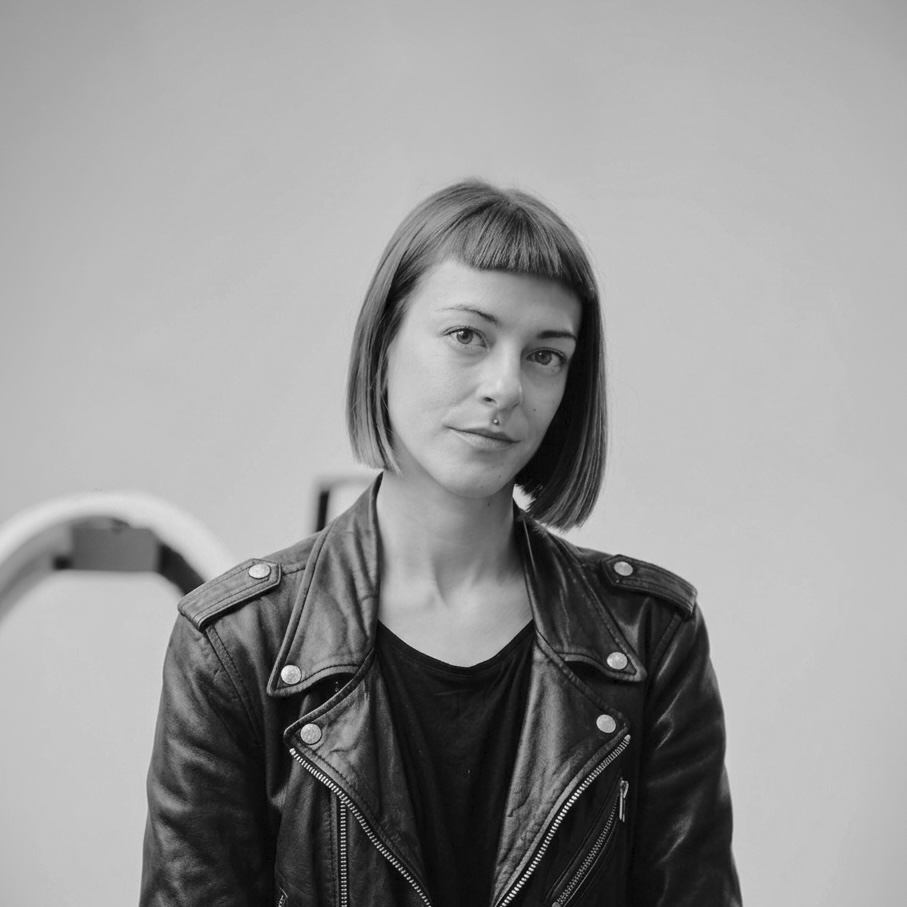
NICOLE COLOMBO (Monza, 1991) is an artist whose practice develops through sculptures and installations, both domestic and large-scale, capable of creating tension between space and the gaze. Her research, rooted in an anthropological approach, explores the dichotomies of human experience and the difficulty of accepting their coexistence.
Through materials such as leather, aluminium, wood, synthetic hair, chains, Plexiglas, and ceramics, Colombo constructs abstract, highly aestheticised and unsettling forms, suspended between comfort and discomfort, desire and repulsion, strength and fragility.
Her works thus become lenses through which to question the body, identity, and reality, opening up spaces of freedom and resistance.