
c/o Osart Gallery, Corso Plebisciti 12
20129 Milan
MON–SUN 10:00–13:00 / 14:30–19:00
ARTISTS:
Damir Ocko
Lucio Fontana (Collezione Ramo)

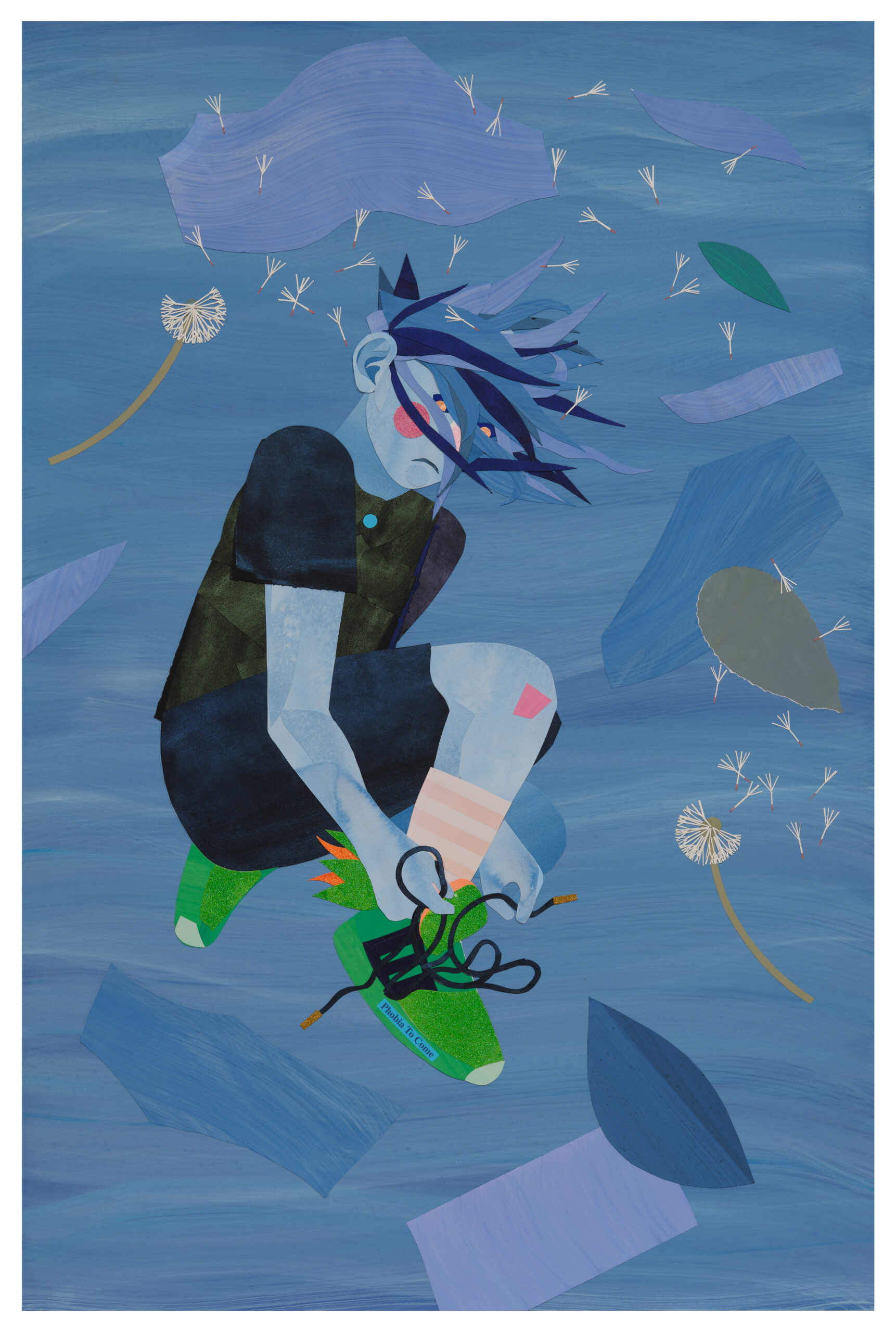
Ocko, Phobia To Come, 2025, collage su cartoncino, 155×105 cm_Photo by Damir Zizic
1378_fontana_i vigliacchi_1933
Damir Očko answers the questions of
Irina Zucca Alessandrelli, curator of the Collezione Ramo
What does drawing mean to you?
For me, drawing is the most primordial tool I have at my disposal as an artist.
What materials, techniques and creative processes do you use when working on paper?
Since I work almost exclusively with paper, I use every technique possible and imaginable: from drawing to watercolour, gouache, collage, and so on. Paper offers incredible versatility, and I am constantly looking for new, and even ancient, ways of using it.
Why did you choose this work from the Ramo Collection?
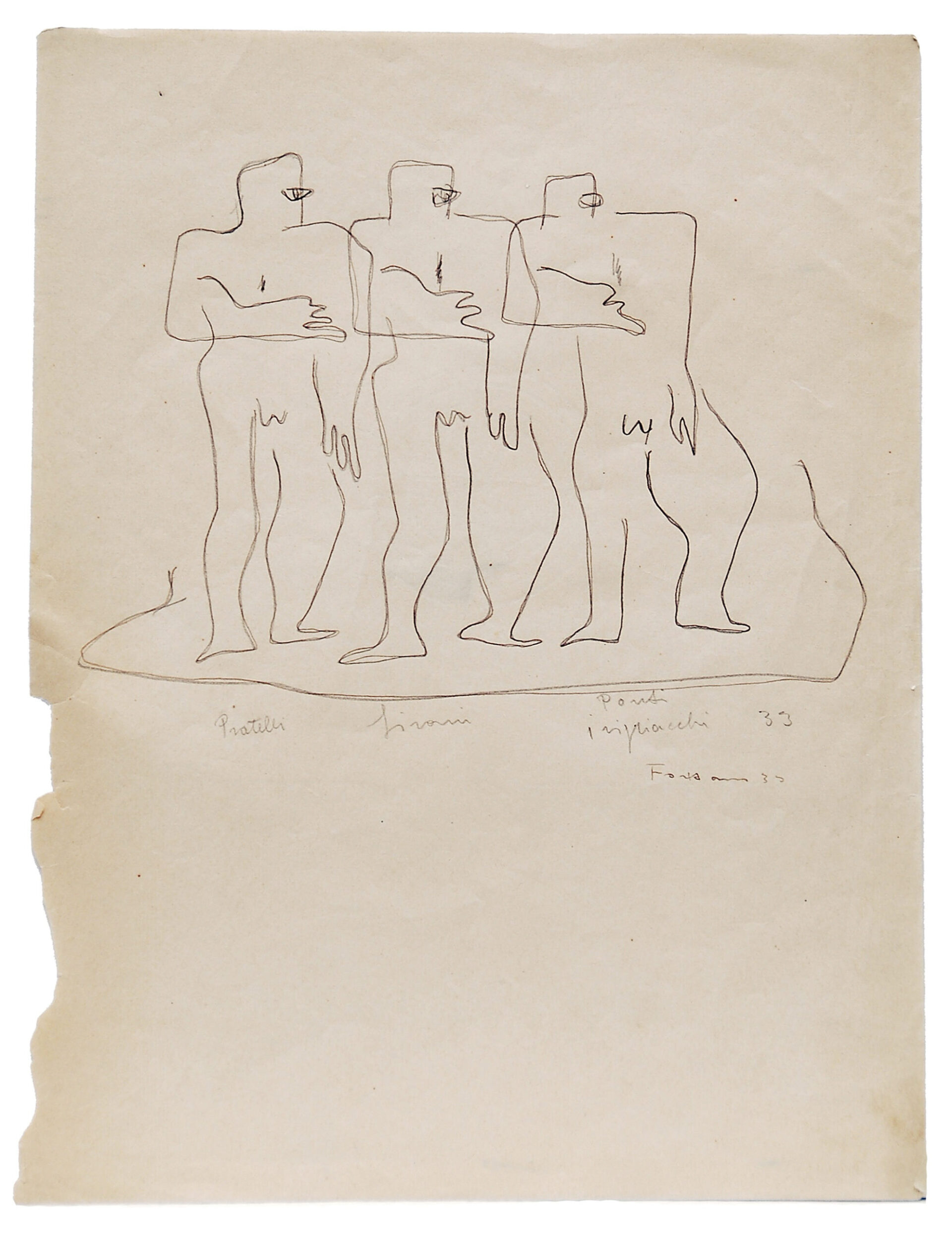
I chose I vigliacchi (Pratelli, Sironi, Ponti) by Lucio Fontana (graphite pencil and ink on paper), not because it resonates stylistically with my work, but because of its spirit: an irreverent reflection on his cowardly contemporaries and their work during the Fascist era. There is also a great deal of irreverence in the works I am bringing into this dialogue.
What value does dialogue with the Masters of the 20th century hold for you?
I often return to the Old Masters and to the masters of the 20th century. Sometimes this reference is very direct in my work, while at other times it is purely research-based; sometimes I am trying to solve a problem and an Old Master offers me a solution, and so on. There is also great value in the possibility of encouraging a different reading of my own work by placing it within a new context.
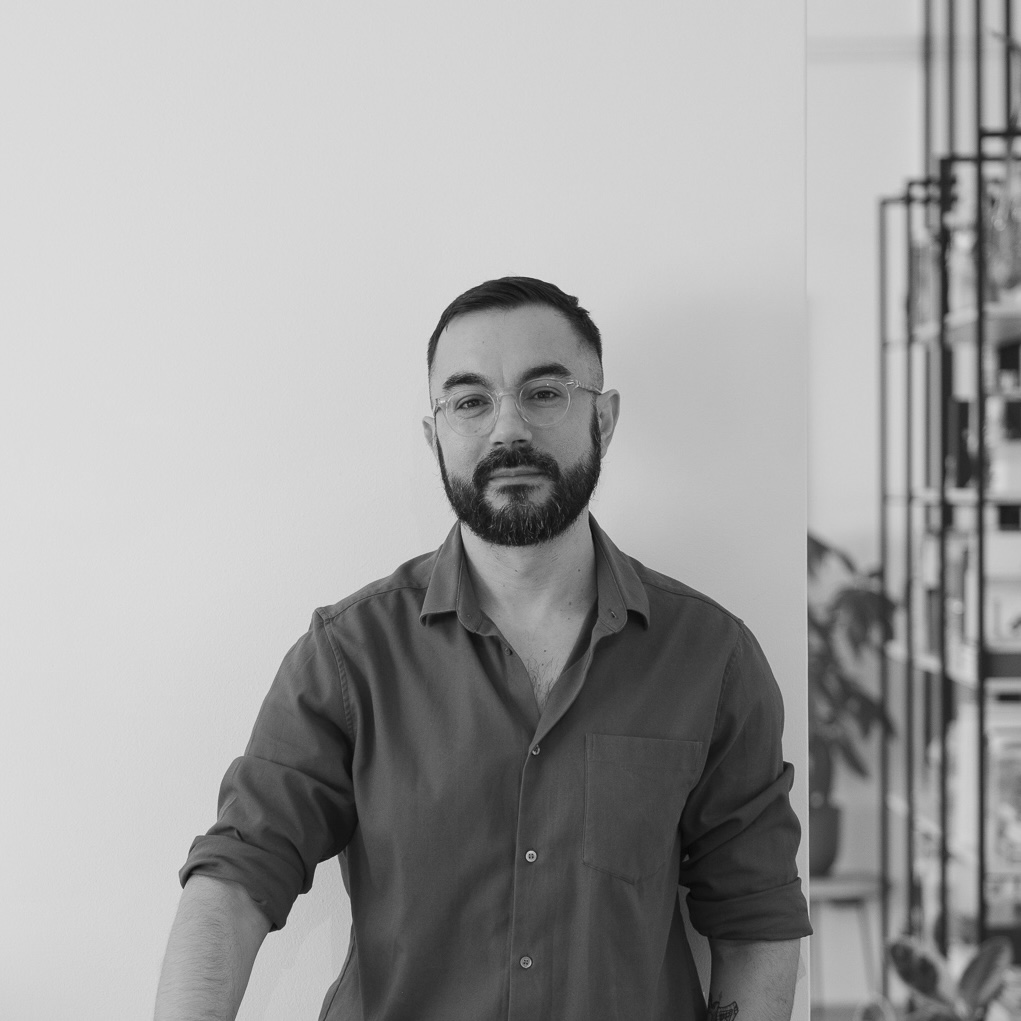
DAMIR OČKO (Zagreb, 1977) lives and works in his hometown, where he studied at the Academy of Fine Arts. His practice encompasses film, video, installations, poetry and drawing, with a particular focus on collage. His works emerge from the juxtaposition of visual fragments, photographs, marks, words and different materials, reassembled into layered compositions of vivid colours. Images and language transform one another, generating associations and new possibilities of meaning.