
c/o Gallerie Guzzetti, Piazza Carlo Caneva 4
20133 Milan
MON–SUN 12:00–19:00
ARTISTS:
Massinissa Selmani
Lucio Del Pezzo (Collezione Ramo)

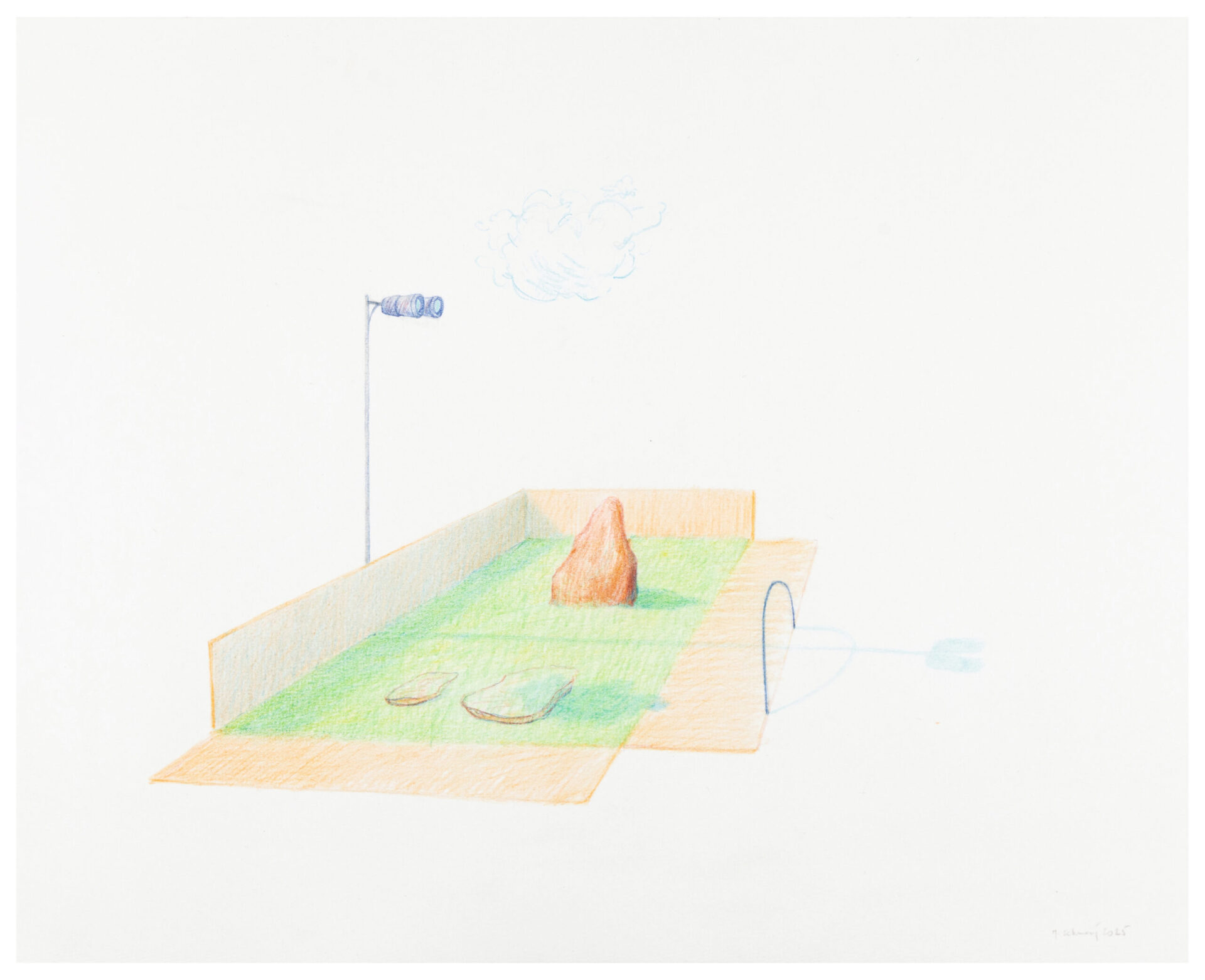
L’oeil au bord du Monde_© Danilo Donzelli Photography
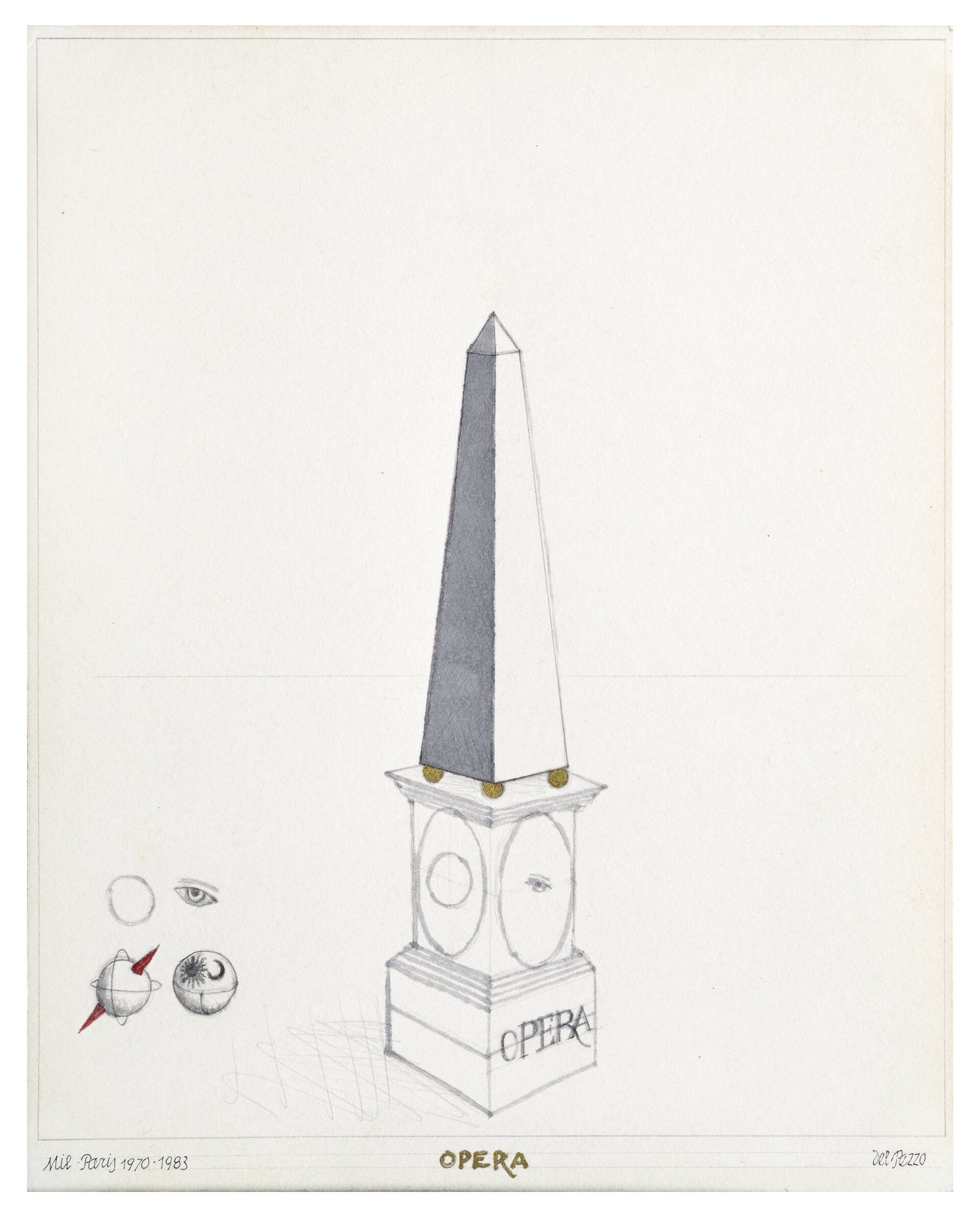
1562_del pezzo_opera_1983
Massinissa Selmani answers the questions of
Irina Zucca Alessandrelli, curator of the Ramo Collection
What does drawing mean to you?
Drawing is a tool for thinking, a vocabulary that helps me understand the world around me; I consider it the first form of documentation. It is also a field of experimentation that is direct and light, offering a remarkable degree of autonomy. The political cartoons that were part of my childhood and early adulthood in Algeria taught me that it is possible to address complex issues through humour and absurdity. That sense of distance has stayed with me and continues to shape my work.
What materials, techniques and creative processes do you use when working on paper?
Most of my source material comes from clippings from international newspapers that I have collected over the years, as well as drawings and notes from my notebooks. I extract visually incompatible elements — silhouettes, architectural fragments, gestures, postures — and remove them from their original context in order to bring them together in unexpected ways. My process is based on collecting, selecting, recontextualising and layering. Formally, all of this takes shape through drawn forms: drawings, short animations, installations and objects.
Why did you choose this work from the Ramo Collection?
Lucio Del Pezzo’s work was a discovery for me. At first, I was drawn to its graphic language. In front of Opera, I was struck by the economy of the composition and the sense of quiet mystery it conveys: the obelisk on its pedestal, the enigmatic forms in the background, the eye enclosed within an ellipse, the fragile line of the horizon. It seems suspended in a place somewhere between theatre and an imaginary archaeology. The word “OPERA” engraved on the base also caught my attention. It simultaneously opens up multiple interpretations, functioning both as a title and as an event. The drawing has an almost metaphysical dimension that I feel close to and that can also be found in some of my works.
What does dialogue with the Masters of the 20th century mean to you?
My work is shaped by my life in Algeria, by Algerian literature, and by artists and movements from different parts of the world, particularly Belgian Surrealism. It is not an academic genealogy. It is a living conversation.
Del Pezzo’s drawing brings together architecture, Surrealism and a metaphysical dimension that reminds me of the world of Saul Steinberg. His work has influenced my practice and the way I think about drawing — as a living language and an extension of thought.
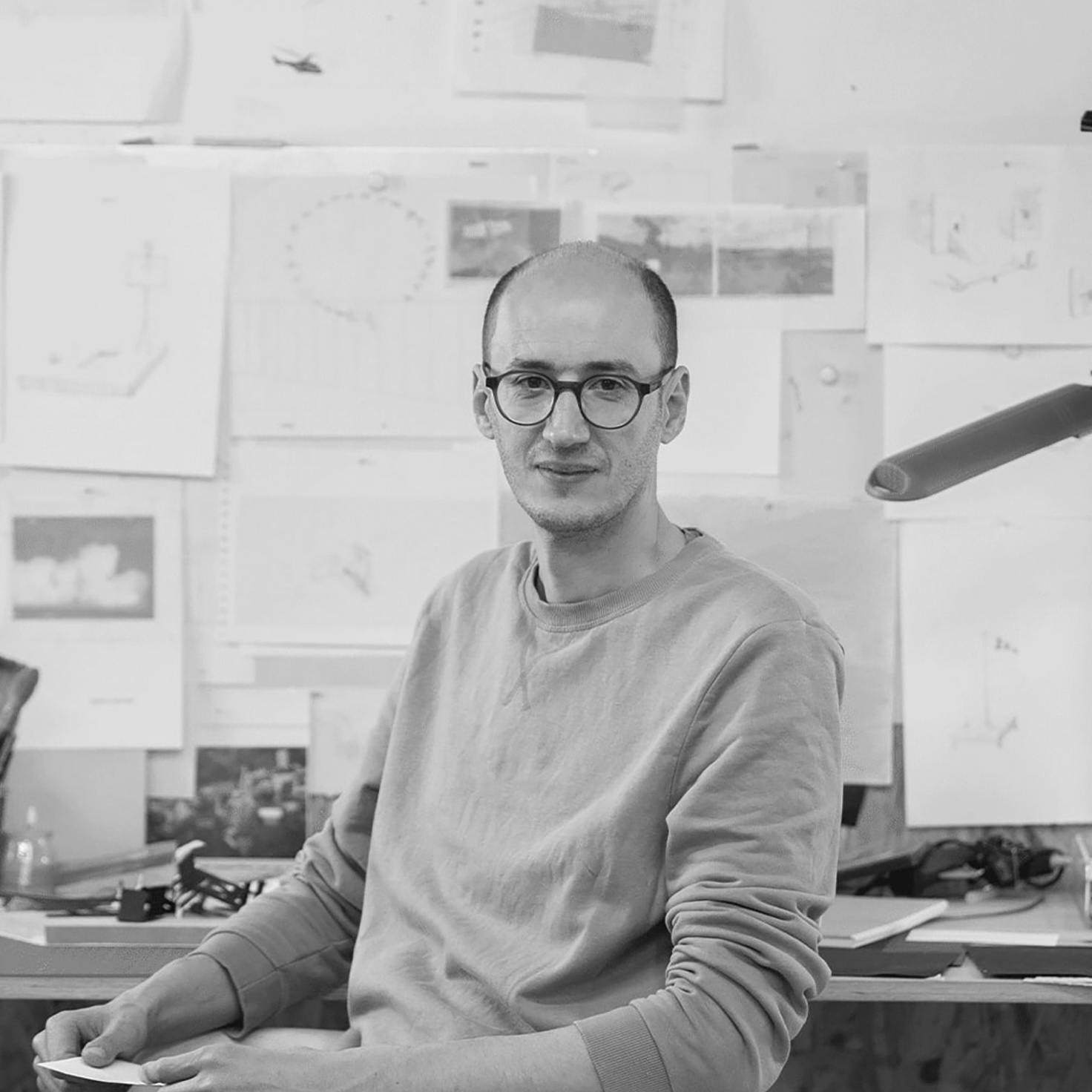
MASSINISSA SELMANI (Algiers, 1980) studied computer science in Algeria and at the École supérieure des beaux-arts in Tours. He has developed a language based on drawing, animation and documentary imagery, intertwining real facts and fictional constructions. His enigmatic and often paradoxical scenes reveal the absurdity of human behaviour and the power dynamics that run through public space and architecture, maintaining a constant balance between irony and tragedy.