
c/o Studio Lombard, Viale Premuda 46
20129 Milan
MON closed
TUE–FRI 2:30–7:00 PM
SAT 11:00 AM–6:00 PM
SUN closed
ARTISTS:
Hernán Pitto Bellocchio
Alighiero Boetti (Collezione Ramo)

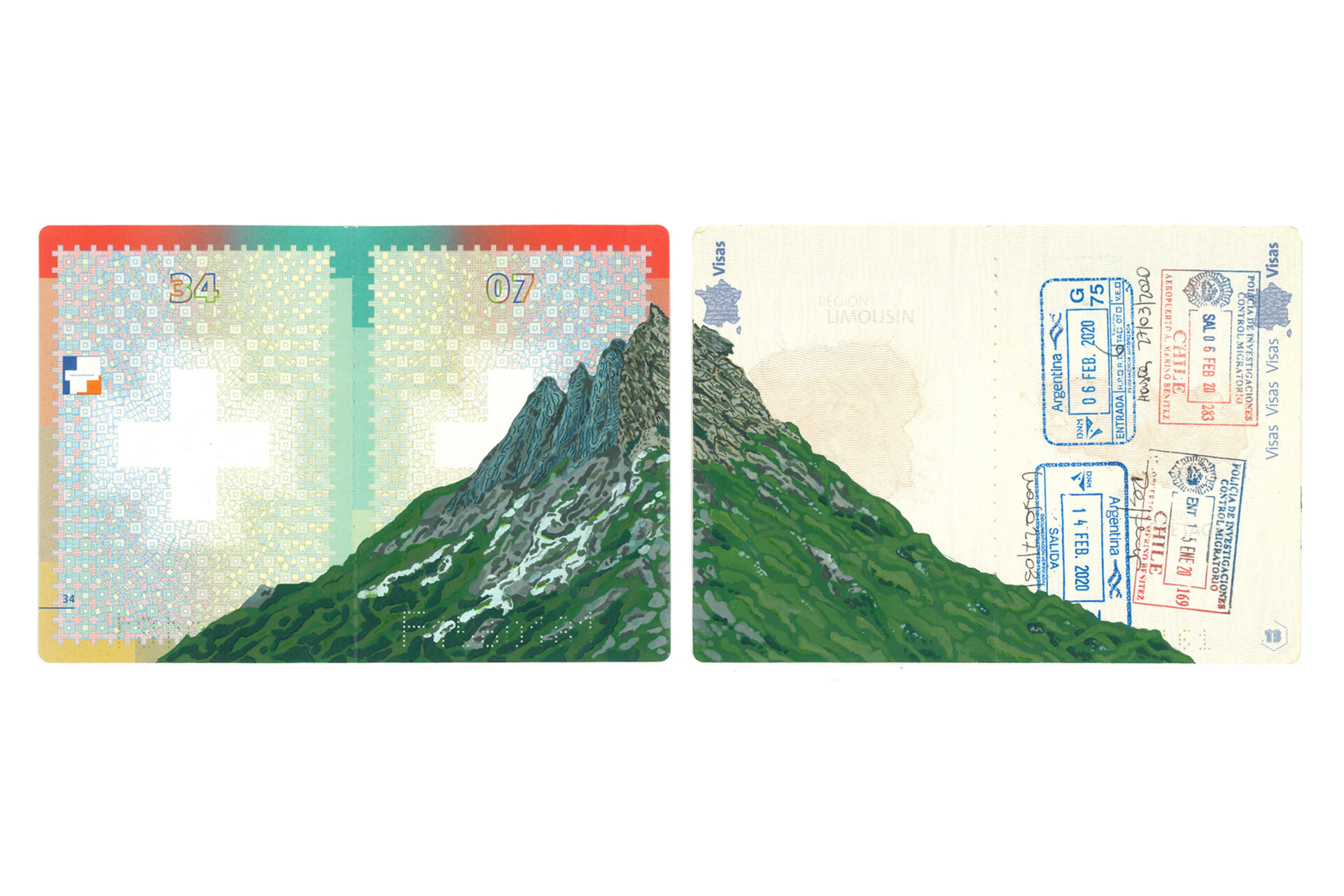
Pitto Bellocchio, Dents Blanches, 2026, inchiostro e acrilico su carta, 17×12,5 cm
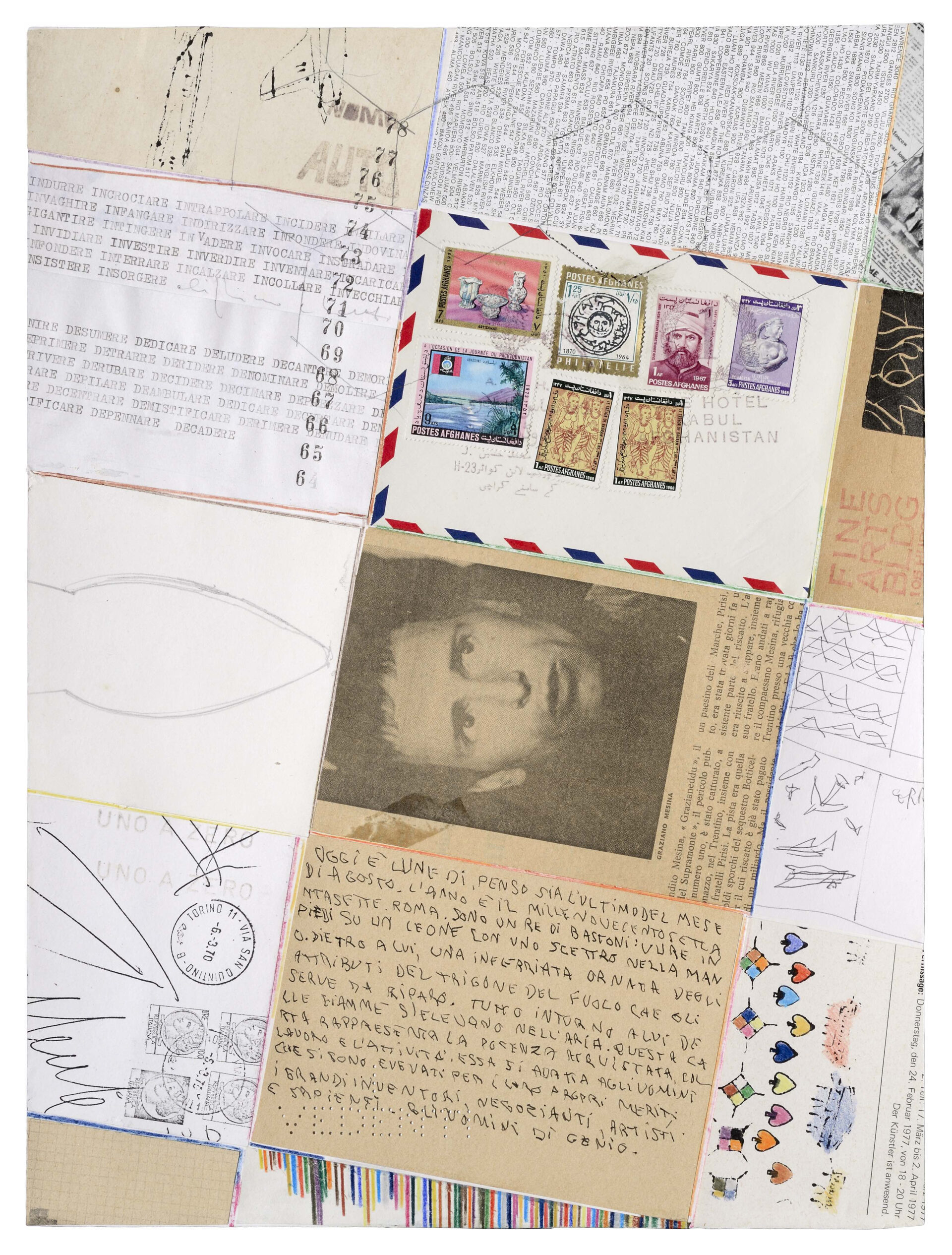
1871_boetti_st_1978 (recto)
Hernán Pitto Bellocchio answers the questions of
Irina Zucca Alessandrelli, curator of the Ramo Collection
What does drawing mean to you?
Through drawing, I think, understand, and develop my ideas. It is a fundamental intellectual tool for constructing my artistic practice. Every concept takes shape through a set of figurative marks or abstract forms that transform themselves like a living organism. Over time, this method is enriched by words that accompany the drawing, generating a visual, symbolic, and ornamental dialogue. Drawing thus becomes an extension of thought, an organ capable of articulating ideas and offering me a deeper understanding of the world I inhabit.
What materials, techniques, and creative processes do you use when working on paper?
I generally carry a notebook and ink pens with me, which I use to record my daily artistic practice, one that avoids rigid disciplinary categorizations. Through drawing, my works can take the form of immersive installations, expanded models, fantastic representations, or spatial interventions that operate simultaneously as simulation and critique. Drawings play a central role as devices for thinking: within them, ideas are shaped and transposed across different scales, from the intimate to the urban, from the imaginary to the built environment. The method underpinning these productions requires time, patience, and prolonged processes of realization. Each work is constructed through successive layers—conceptual, material, and territorial—that require an ongoing engagement with the specific context.
Why did you choose this work from the Ramo Collection?
I chose Untitled (The Sighted) by Alighiero Boetti because it resonates deeply with my research on passports. The work constructs an intimate cartography made up of documents, stamps, letters, images, and traces of travel, transforming materials of communication into a symbolic territory. In a similar way, my Passports project starts from real documents to question the meaning of national identity, borders, and contemporary mobility through an intimate, unique, and irreplaceable document.
In both works, the paper support preserves traces of time and circulation, giving the work a material dimension of time. Travel is not merely a movement through space, but a device capable of connecting memories, cultures, and geographies, imagining new forms of belonging and narratives beyond political borders.
What value does your dialogue with the Masters of the 20th century hold for you?
For me, the dialogue with the Masters of the 20th century represents an ongoing engagement with practices that have redefined the relationship between art and territory. More than a formal reference, I consider their work a research method: the ability to transform everyday materials, documents, maps, and landscapes into tools for critical and political reflection. Like the historical avant-gardes, I believe in art’s ability to imagine new utopias and to reinterpret territory as a continuum, beyond political, geographical, and cultural borders.
My practice engages with the issues of the present—mobility, memory, and identity—seeking new ways of reading the landscape through drawing, installation, and interventions in public space.
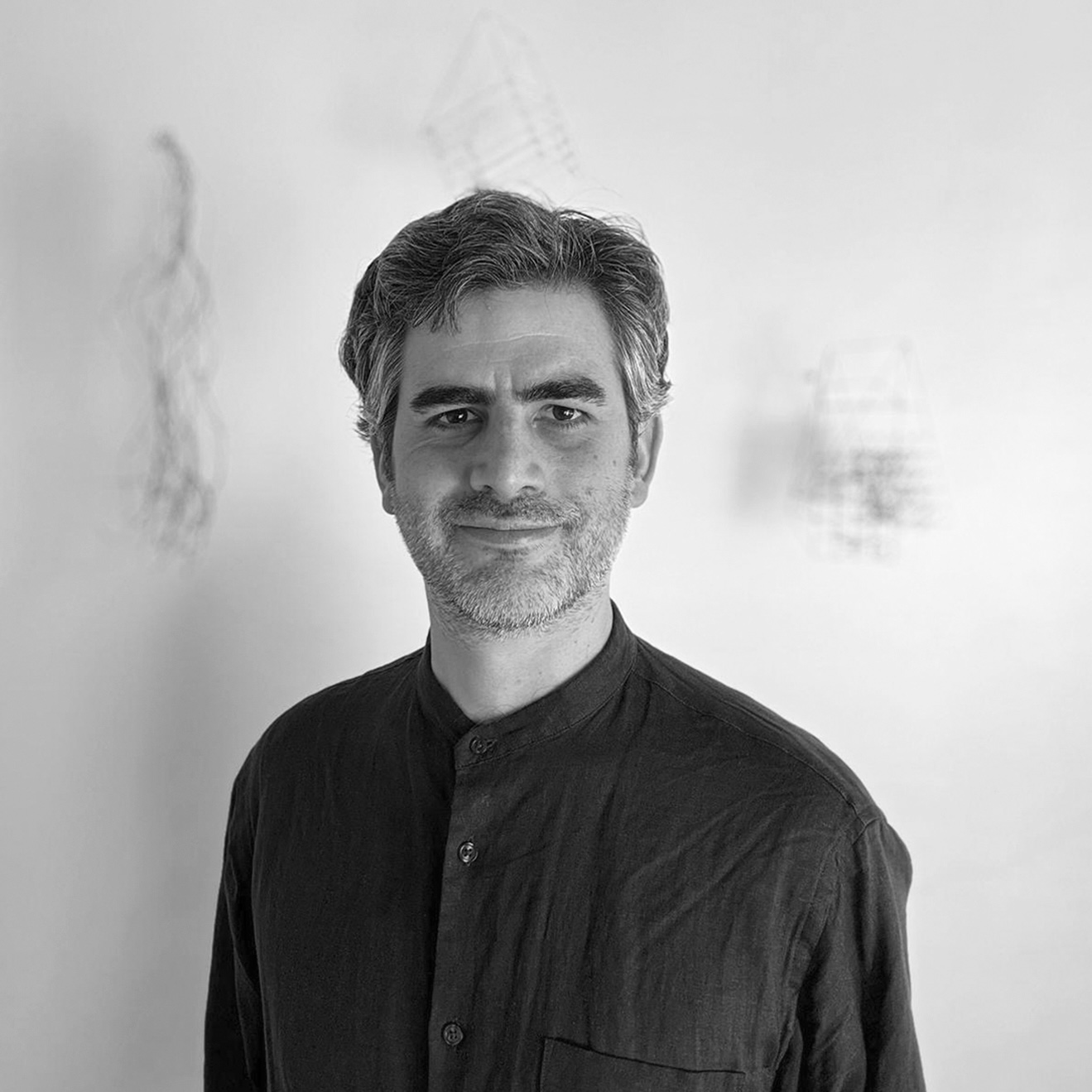
HERNÁN PITTO BELLOCCHIO (Santiago, Chile, 1984) is a Chilean architect and artist, a graduate of Universidad Finis Terrae, with a Master’s degree in Exhibition Design from Politecnico di Milano. He has exhibited at Fondazione Merz, Art Düsseldorf, Salone del Mobile, Spring/Break Art Show (New York), and Bienal Sur. Working through an interdisciplinary approach, his practice investigates the relationship between nature, architecture, and memory, giving shape to botanical utopias that intertwine cultural narratives and mythologies between the Americas and Europe. By proposing new symbolic configurations of territory, his works transform vegetation into a critical device through which he questions borders, national identities, and structures of political power.