
Via Carlo Boncompagni, 44
20139 Milan, Italy
MON CLOSED
TUE – FRI 11 AM / 1:30 PM – 2:30 PM / 7 PM
SAT 3 PM / 7 PM
SUN CLOSED
ARTISTS: Carlo e Fabio Ingrassia Merardo Rosso (Collezione Ramo)

Galleria ZERO…
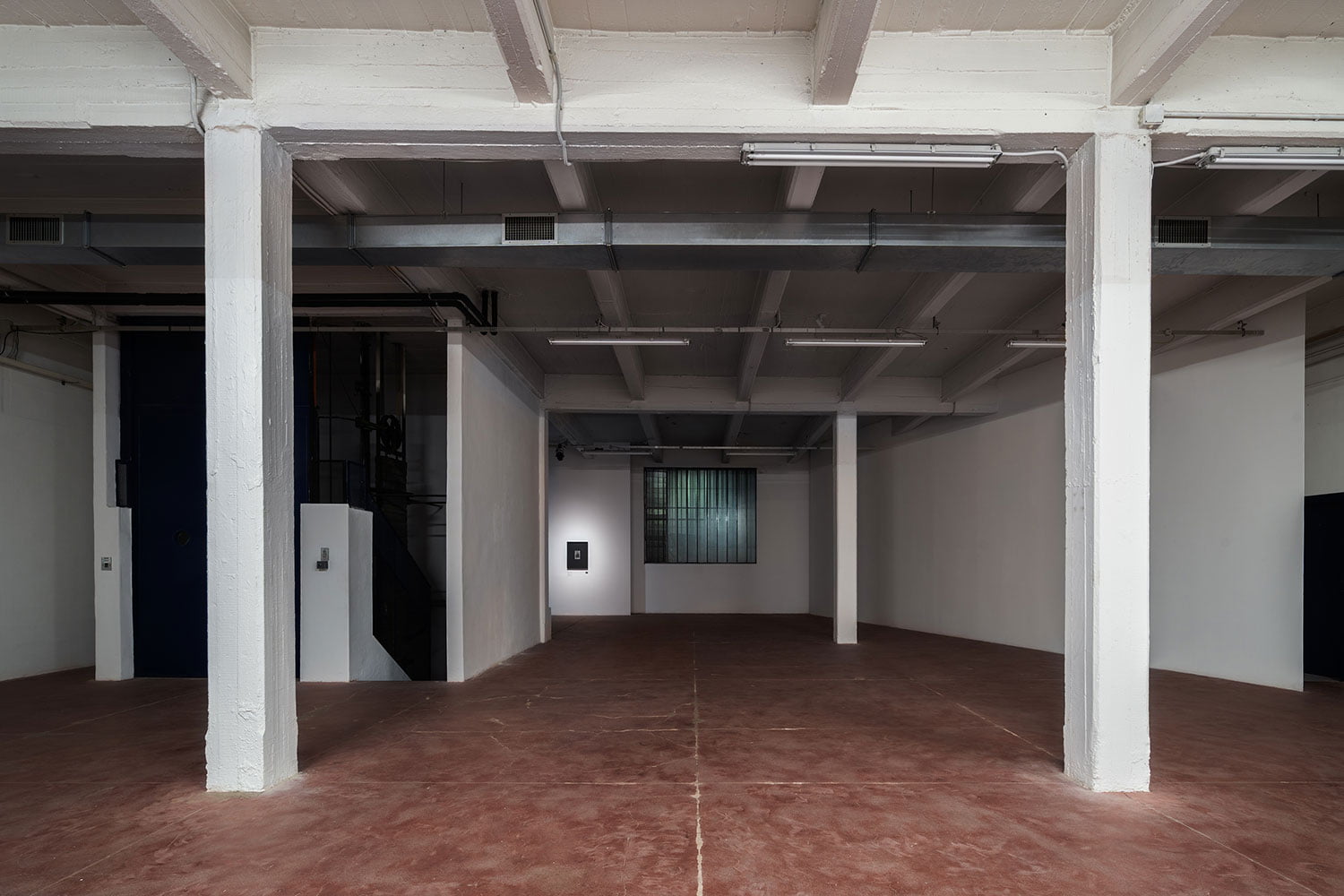
Galleria ZERO…

Galleria ZERO…

Galleria ZERO…

Medardo Rosso

Carlo e Fabio Ingrassia

Carlo and Fabio Ingrassia answer questions from Irina Zucca Alessandrelli, curator of the Collezione Ramo
Give a definition of what drawing is for you.
Our drawings are graphic cores. Our color appears as a phenomenon, an event of natural matter precisely, without being naturalistic.
We move around a point, a demographic movement, a continuous movement.
You have to give the work a physical resistance, you have to claim the need to use materials. Drawing for us develops an extreme visual objectivity and acts as an international sign, a signal rather than a sign, it is a matter that generates matter.
They are receptive colors.
What is your relationship with drawing? And with the history of Italian art of the last century?
The extraordinary alphabet of drawing allows us the conceptual materialization of anything, and its lightness allows us any exchange. Our operation makes the work take on, a conformation that seems endowed with a life of its own. We pose the question of the material presence of the work as a concrete relation, in its giving itself as a concrete fact. We seek a sign that is self-sufficient. The work in our view is a thermodynamic principle.
The relationship with drawing is seen by both of them through an additive and subtractive synthesis, a phenomenon of collision of the near and far that we call the phenomenon of acceleration.
It is precisely under these circumstances that drawing, as an organism, feels like an organism, and feels itself to be constantly expanding, from outside to inside, from inside to outside.
The relationship with art history exists to the extent that man can retain of the past only what serves his progress, and this is done through a system of sympathies and affections. We began to familiarize ourselves with some artists by reading writings, diaries, critical texts they left behind over time, and it surprised us how in those thoughts we found references very close to the discoveries we knew we had made. After all, we work on the already been. The witness is the third, he is the one who survives, and if there is repetition there is possibility of recording and archiving.
Why did you choose this work from Collezione Ramo?
We think that the concept of art history can be defined as “living material,” a theme that so tormented an artist like Medardo Rosso, who is present in the Collezione Ramo.
We felt it was an act of love for this master.
The drawing we chose is a scene with two passersby, it is an opening, it is an instant focused. Irregularity seeks a surrounding atmosphere, light pervades everything, nothing and no one is separated. It is a conceptual operation that convinced us in our choice: the rational belief that for a moment the object looked at emerges visually from the continuous flow of atmospheric matter, just as it would in real space.